
Few names in South African history carry the weight of King Shaka. In little more than a decade he turned a small clan into the Zulu kingdom, changed the way wars were fought in south-east Africa, and left a legacy that is still part of everyday life in KwaZulu-Natal – from public holidays to the name of Durban’s international airport.
This guide covers who King Shaka was, how he built the Zulu nation, how he died, and where you can follow his story in KwaZulu-Natal today.
Who was King Shaka?
Shaka kaSenzangakhona was born around 1787, the son of Senzangakhona, chief of the then-small Zulu clan, and Nandi, a woman of the Langeni people. His childhood was famously hard. Nandi and her son were not accepted at Senzangakhona’s homestead, and they moved between relatives before finding refuge with the Mthethwa, a powerful chiefdom ruled by Dingiswayo.
It was in Dingiswayo’s army that the young Shaka made his name. He proved to be a fearless fighter and a natural leader, and he rose quickly through the ranks.
From a small clan to the Zulu kingdom
When Senzangakhona died in 1816, Shaka took control of the Zulu with Dingiswayo’s support. At the time the Zulu were a minor group. After Dingiswayo was killed by Zwide of the Ndwandwe a year or two later, Shaka stepped into the gap, defeated the Ndwandwe and began bringing neighbouring chiefdoms under Zulu rule.
Rather than simply defeating rivals, Shaka absorbed them. Conquered people became Zulu subjects and their young men joined his regiments. Within about a decade the Zulu kingdom stretched across much of what is now northern KwaZulu-Natal.
Shaka’s military system
King Shaka is best remembered as a military innovator. Historians still debate how much he invented and how much he refined from earlier practice, but the system associated with him included:
- Age regiments (amabutho) – young men of the same age were grouped into regiments that lived at royal military homesteads and owed loyalty directly to the king.
- The short stabbing spear (iklwa) – used for close combat behind a large cowhide shield, instead of throwing spears from a distance.
- The “horns of the buffalo” (izimpondo zankomo) – a formation in which the fast-moving “horns” encircled the enemy while the “chest” attacked head-on and the “loins” waited in reserve.
- Speed and discipline – warriors trained hard and could cover long distances quickly on foot.
The same tactics were still in use half a century later, when the Zulu army defeated a British force at Isandlwana in 1879. You can read more about that in how the Zulus defeated the British.
Shaka and the traders at Port Natal
From 1824, a small group of British traders settled at Port Natal, the bay that would become Durban. Shaka allowed them to stay under his protection and traded with them, mainly in ivory and cattle. Their written accounts are among the few first-hand descriptions of the king that survive, which is one reason his story has been told so differently over the years.
How did King Shaka die?
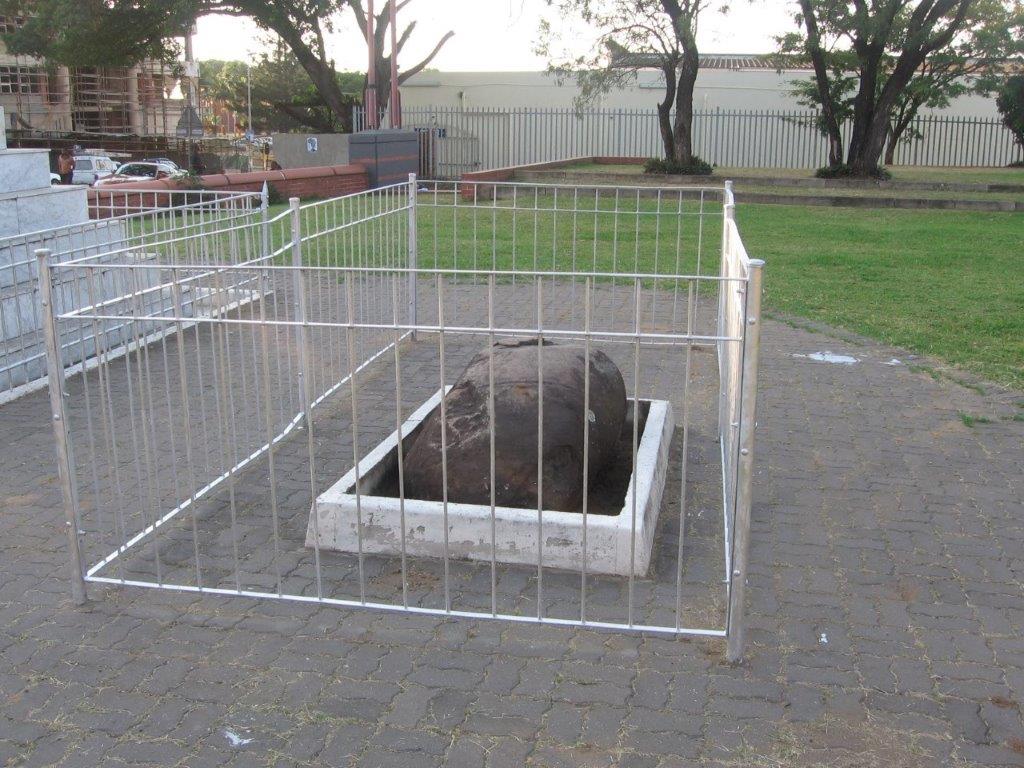
King Shaka was assassinated in September 1828 at KwaDukuza, his royal homestead on the north coast, by his half-brothers Dingane and Mhlangana with the help of his attendant Mbopha. Dingane then became king. Shaka was buried at KwaDukuza, and the town that grew up there (known for many years as Stanger) has since taken back the name KwaDukuza. A memorial marks his resting place.
King Shaka in South Africa today
Shaka’s influence is easy to spot in modern South Africa:
- 24 September – the date traditionally marked as King Shaka Day is now celebrated nationally as Heritage Day, and it is still observed as King Shaka Day in KwaZulu-Natal.
- King Shaka International Airport – Durban’s airport, opened in 2010, is named after him. Many visitors to KZN see his name before they see anything else.
- The Zulu nation – the kingdom he founded grew into the largest ethnic group in South Africa, and isiZulu is the country’s most widely spoken home language.
- Film and television – the 1986 television series Shaka Zulu made his story famous around the world. Its set near Eshowe is now the Shakaland cultural village.
Where to explore King Shaka’s story in KwaZulu-Natal
If you’d like to see the places connected with Shaka for yourself, these Daytours KZN tours are a good place to start:
- Shakaland Tour – a day trip north of the Thukela River to the cultural village built on the Shaka Zulu film set, with dancing, traditional food and insight into daily life in Shaka’s time.
- Zulu Historical Tour – walk in the footsteps of the Zulu kings, including sites linked to Shaka.
- Battlefields Tour – see how the kingdom Shaka built took on the British Empire in 1879 at Isandlwana and Rorke’s Drift.
Every tour is private and planned around you. Get in touch to plan a day that follows King Shaka’s story.
King Shaka FAQs
When was King Shaka born?
Most historians place his birth around 1787. The exact date is not recorded.
Where is King Shaka buried?
At KwaDukuza on the KwaZulu-Natal north coast, where he was killed in 1828. The town was called Stanger for many years before reverting to its Zulu name.
Why is Durban airport named after King Shaka?
King Shaka International Airport, opened in 2010, honours the founder of the Zulu kingdom, the most important historical figure in KwaZulu-Natal.
Was Shaka Zulu a real person?
Yes. Shaka kaSenzangakhona was a real king who ruled the Zulu from 1816 until his death in 1828. Some of the legends told about him are exaggerated, but the kingdom he built is very real.